|
| August 2026, Volume 03, Issue 01 |
|
|
|
|
|
|
|
| From the Director’s Desk – Dr André Rose |
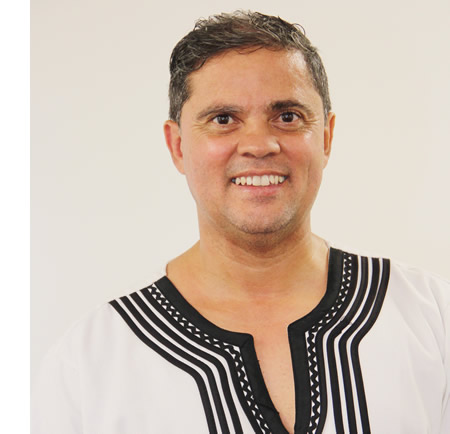
As SAPRIN continues to evolve as South Africa's national population health research infrastructure, we have reached several important milestones this year. Foremost among these is the release of the Individual Surveillance Episodes 2025 Datasets, which for the first time includes data from our urban HDSS node, GRT-INSPIRED. This expansion strengthens our ability to generate high-quality longitudinal evidence across both rural and urban communities. By bringing together data from both rural and urban populations, SAPRIN is uniquely positioned to provide evidence that supports research excellence, informs policy and strengthens public health planning across South Africa.
Congratulations to Professors Kathleen Kahn and Stephen Tollman of the SAMRC/Wits Rural Public Health and Health Transitions Research Unit (Agincourt) for winning the Special Annual Theme Award on Healthy Ageing at the prestigious 2025/2026 NSTF-South32 Awards. This honour truly reflects their commitment to advancing population-based science on the crucial issue of rural healthy ageing. SAPRIN is proud to have them within our network.
|
|
|
|
|
| SAPRIN Expands National Surveillance Data with Inclusion of First Urban HDSS Node |
|
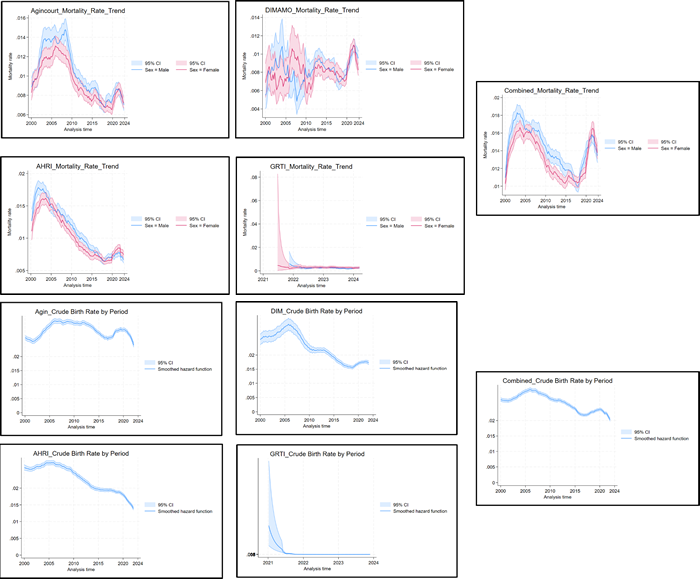
The South African Population Research Infrastructure Network (SAPRIN) released its Individual Surveillance Episodes 2025 Datasets earlier this year. A significant milestone is the inclusion of data from SAPRIN’s first urban Health and Demographic Surveillance System (HDSS) node, GRT-INSPIRED. The addition enhances SAPRIN's ability to track population, health and demographic transitions across both rural and urban South African settings.
The dataset contains longitudinal population data from 1 January 1993 to 31 December 2024 for four SAPRIN HDSS nodes. The three founding nodes are: MRC/Wits University Agincourt HDSS in Bushbuckridge District, Mpumalanga, established in 1993, with a current population of 119,050 people; the University of Limpopo DIMAMO HDSS in the Capricorn District of Limpopo, established in 1996, with a current population of 103,868; the Africa Health Research Institute (AHRI) HDSS in uMkhanyakude District, KwaZulu-Natal, established in 2000, with a current population of 159,204; and the GRT-INSPIRED HDSS, Gauteng, established in 2020, with a current population of 68,417. This brings the dataset size to 450,539.
|
|
|
|
|
|
| Taking the long view to improve Africa’s rural health landscape |
|
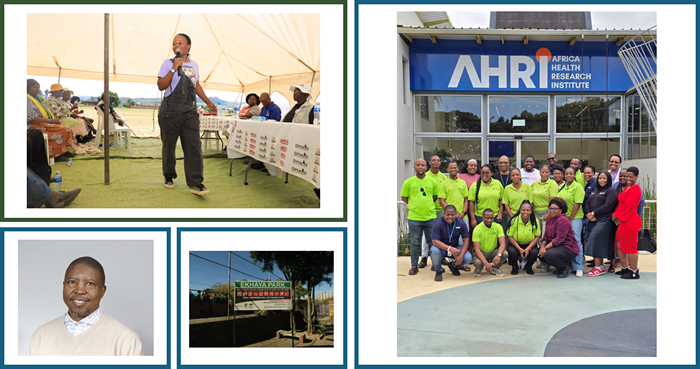
Professors Kathleen Kahn and Stephen Tollman at Wits Rural Agincourt received the National Science and Technology Forum (NSTF) -South32 Awards Special Annual Theme Award: Healthy Ageing.
The award is a testament to their immense contribution in building evidence on health, ageing and development along the life course in South and sub-Saharan Africa – data that is used by researchers and policymakers globally.
While Kahn’s and Tollman’s work has homed in on older people in rural areas, their research was borne out of the fact that 30 years ago, virtually no information on any age group was available.
|
|
|
|
|
|
| USINGA HDSS Strengthens Community Input into Future TB Vaccine Rollout Planning |
|
The Umlazi Surveillance Initiative to Nurture Grassroot Action (USINGA) HDSS, under the leadership of Nodal Director, Dr Nompumelelo Mbele, has taken an important step towards supporting the future rollout of tuberculosis (TB) vaccines by implementing the Developing an Integrated Model of Delivery for Novel TB Vaccines in South Africa (IMD-TBV) study.
Tuberculosis remains one of South Africa’s leading causes of morbidity and mortality. While the current Bacillus Calmette-Guérin (BCG) vaccine provides early-life protection, evidence suggests that its effectiveness declines over time, necessitating the development of novel vaccine strategies for adolescents and adults. In this context, the IMD-TBV study seeks to generate empirical evidence on community perceptions and inform the design of feasible and acceptable vaccine delivery models.
|
|
|
|
|
|
| In Conversation with Dr André Rose |
|
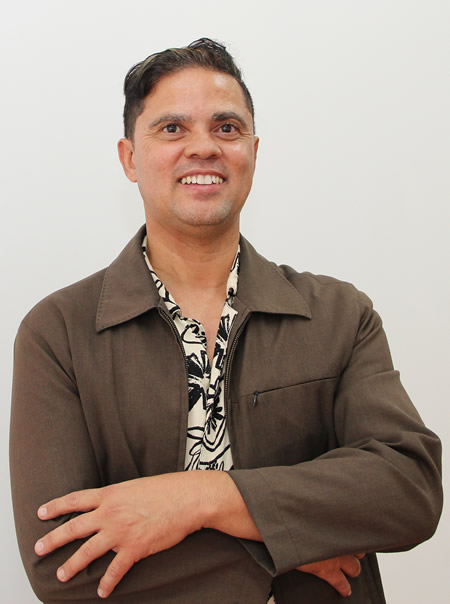
In this edition of The SAPRIN Connection we speak to Dr André Rose, newly appointed Director of the South African Population Research Infrastructure Network (SAPRIN). Roopa Moodley, SAPRIN’s Public Relations Manager explores his impressive professional path which has ultimately led him to the field of population research.
Dr André Rose is a medical doctor who qualified with a Bachelor of Medicine and Surgery (MBChB) from the University of the Witwatersrand in 1999. André performed well at school and his parents were supportive as he tried to navigate his career choices. He recollects that there was one exception, his parents firmly drew the line when he was contemplating marine biology. “They had this idea of me having to go diving with sharks and possibly dying,” recalls André. André experienced a religious epiphany which cemented his desire to serve, and he was driven by a powerful sense of calling to become a missionary doctor.
|
|
|
|
|
|
| USINGA Authors a Chapter on Maternal Mortality in the 2024/25 HST District Health Barometer |
|
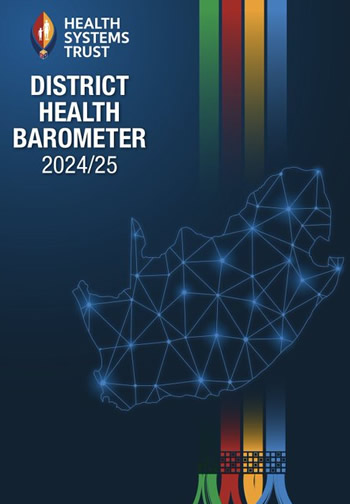
The Umlazi Surveillance Initiative to Nurture Grassroots Action (USINGA) continues to help shape South Africa's public health agenda through its latest contribution to the Health Systems Trust (HST) District Health Barometer 2024/25. USINGA HDSS Director; Dr Nompumelelo Mbele, Livhuwani Mashamba, Sindisiwe Ngobese, and Minenhle Mbanjwa authored a chapter on in-facility maternal mortality, providing robust evidence on gaps in maternal healthcare services and highlighting opportunities for the Department of Health to accelerate progress towards the Sustainable Development Goals (SDGs).
The chapter delivers sobering insights into the current trajectory of maternal health across South African facilities:
|
|
|
|
|
|
| UTHINGO Hosts Community Engagement Workshop |
|
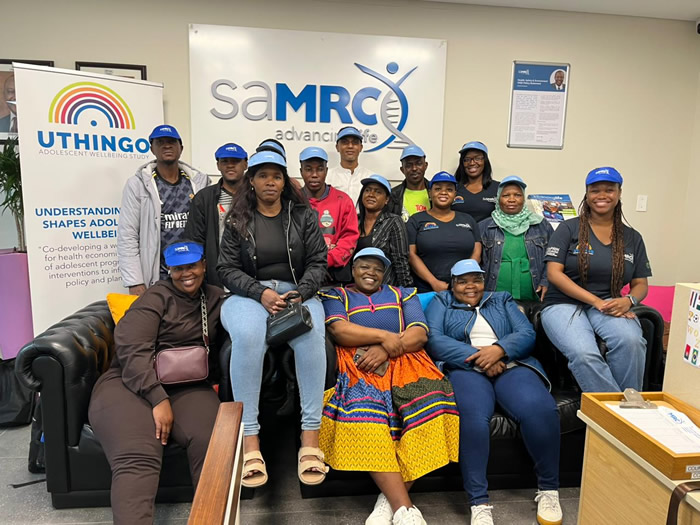
On 13 June 2026, the UThingo team from the Health Systems Research Unit (HSRU) hosted its first dissemination community engagement workshop, bringing together a diverse group of stakeholders from across Durban. The session formed part of ongoing work to co-develop a wellbeing scale for adolescents in sub-Saharan Africa (SSA).
Building on earlier work conducted among adolescents and young people in the region by Dr Darshini Govindasamy, UThingo senior Principal Investigator, the UThingo study aims to co-develop a wellbeing tool that reflects the lived experiences and needs of adolescents, particularly those living with HIV in South Africa. This work is important in helping ensure that programmes and policies for young people are practical, relevant, and responsive to the realities they face in their everyday lives.
|
|
|
|
|
|
| Listening before the next death |
|
How VAPAR turned verbal autopsy, community intelligence, and action learning into a model for rural health systems
“Alcohol is destroying our communities and families. If we continue like this, our children will not have a better future.”
This was the diagnosis of a community in rural Mpumalanga, where for 10 years residents participated in identifying health problems to inform the development of better, more appropriate health care services.
An evaluation of the Verbal Autopsy with Participatory Action Research (VAPAR) initiative, launched in 2015 by the SAMRC/Wits Rural Public Health and Health Transitions Research Unit (Agincourt), the Mpumalanga Department of Health, and the University of Aberdeen, found that better health data to strengthen health systems is not only produced through routine statistics or medical cause-of-death information.
|
|
|
|
|
|
| Successful Gen S Youth Programme takes place in Durban |
|
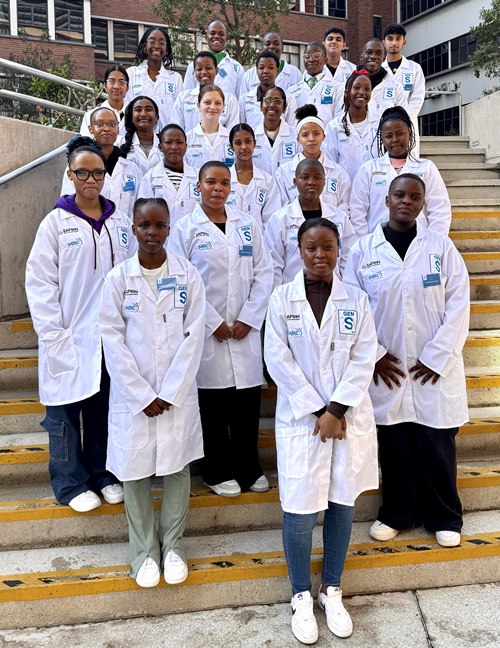
The South African Medical Research Council’s (SAMRC) Generation Science (Gen S) Youth Job Shadow programme took place in Durban from 07 – 10 July. Twenty-five eager Grade 11 learners gathered at the SAMRC Durban offices and participated in an immersive programme focused on providing hands-on experience on the various science careers available at the SAMRC.
The cohort of learners consisted of top achieving learners interested in the science and mathematical fields from schools in Chesterville, Durban, Umlazi and children of SAMRC staff. The comprehensive four-day long programme saw learners engage with the Biostatistics Research Unit, Health Systems Research Unit, HIV and other Infectious Diseases Unit (HIDRU), the Malaria Research Group and the South African Population Research Infrastructure Network (SAPRIN).
|
|
|
|
|
|
| Free Medical Male Circumcision Programme Benefits the Melusi Community |
|
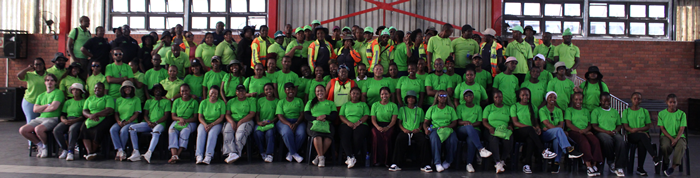
The City Health Medical Centre (Leratong Hospice) in collaboration with the University of Pretoria (UP) GRT-I staff, successfully conducted a Voluntary Medical Male Circumcision (VMMC) programme in Melusi. The initiative targeted teenage boys while also welcoming adult men who wished to undergo the procedure. This initiative was spearheaded by Mr Lethabo Tjege and Dr Thami Shogole at The City Health Medical Centre.
University of Pretoria GRT-I fieldworkers played a key role in mobilising residents by informing eligible participants that free circumcision services would be available at UP Melusi Clinic. City Health Medical Centre was responsible for conducting the medical assessments and performing the circumcision procedures.
|
|
|
|
|
|
| UKZN Postgraduate Students Gain Real-World HDSS Field Experience in Umlazi Ward 88 |
|
The Umlazi Surveillance Initiative to Nurture Grassroots Action (USINGA), hosted an immersive field activation day for postgraduate students on 9 March 2026. The activity formed part of the Postgraduate Bootcamp of the Population and Development Discipline within the School of Social Sciences at the University of KwaZulu – Natal (UKZN).
The programme commenced with a presentation by Dr Nompumelelo Mbele, the USINGA Nodal Director, who introduced students to USINGA and provided an overview of the functioning of a Health and Demographic Surveillance System (HDSS). She outlined the core processes of longitudinal data collection, including household enumeration, routine follow-up visits, and the recording of key demographic events such as births, deaths, and migration.
|
|
|
|
|
|
| News in Brief |
- Professor Setswe Appointed as CEO of Aurum Institute SA
- GRT-INSPIRED hosts Mandela Day activities
- DIMAMO HDSS hosts outreach event
- AHRI Hosts USINGA for Benchmarking Session
|
|
|
|
|
|
|
|